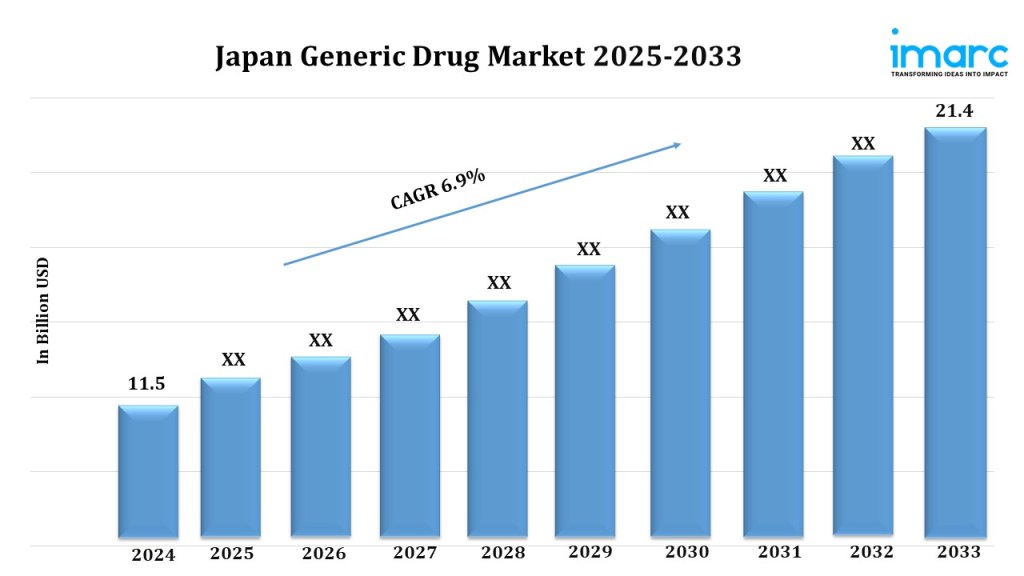
According to the IMARC Group, the Japan generic drug market size reached USD 11.5 Billion in 2024. Looking forward, IMARC Group expects the market to reach USD 21.4 Billion by 2033, exhibiting a growth rate (CAGR) of 6.9% during 2025-2033. This market is growing due to cost-effective alternatives, patent expirations, government support, and aging population.
Growing healthcare costs as well as the initiatives by government authorities to promote the use of cost-effective medications are the factors responsible for the growth of Japan Generic Drug Market. Additionally, the demand for affordable healthcare solutions has surged with an aging population and increasing prevalence of chronic diseases. The government authorities have implemented various policies to encourage the adoption of generic drugs, including setting targets for generic drug utilization and revising reimbursement systems to incentivize their prescription. These measures aim to lower the financial burden on the healthcare system while ensuring broad access to essential medicines. The growing consciousness among patients and healthcare providers about the efficacy as well as safety of generic drugs is further propelling market growth.
Technological advancements and the entry of global pharmaceutical companies are key trends shaping the Japan generic drug market. In addition to this, domestic and international players are investing in research and development to produce high-quality generics that meet stringent regulatory standards, which is acting as another significant growth-inducing factor. Moreover, the market is witnessing an increase in biosimilars, which are generic versions of biologic drugs, offering new growth opportunities. The shift toward online pharmacies and e-health platforms is also enhancing the distribution and accessibility of generic medications. Furthermore, the ongoing patent expirations of several blockbuster drugs are creating a favorable environment for generic drug manufacturers to expand their portfolios. A supportive regulatory framework is expected to drive the expansion of the Japan generic drug market in the coming years.
Japan Generic Drug Market Report Segmentation:
We explore the factors propelling the Japan generic drug market growth, including technological advancements, consumer behaviors, and regulatory changes.
Breakup By Product Type
Small Molecule Drugs
Biologic Drugs (Biosimilars)
Breakup By Application
Cardiovascular Diseases
Diabetes
Infectious Diseases
Oncology
Neurological Disorders
Respiratory Diseases
Gastrointestinal Disorders
Others
Breakup By Distribution Channel
Hospital Pharmacies
Retail Pharmacies
Online Pharmacies
Other Channels
Breakup By Route of Administration
Oral
Injectable
Topical
Others
Breakup By End-User
Hospitals and Clinics
Home Healthcare
Specialty Care Centers
Breakup By Region
Kanto Region
Kansai Region
Chubu Region
Tohoku Region
Other Regions
Competitive Landscape:
The competitive landscape of the industry has also been examined along with the profiles of the key players.
Comprehensive Mapping of the Competitive Landscape
Note: If you require any specific information that is not covered currently within the scope of the report, we will provide the same as a part of the customization.
About Us:
IMARC Group is a global management consulting firm that helps the world’s most ambitious changemakers to create a lasting impact. The company provide a comprehensive suite of market entry and expansion services. IMARC offerings include thorough market assessment, feasibility studies, company incorporation assistance, factory setup support, regulatory approvals and licensing navigation, branding, marketing and sales strategies, competitive landscape and benchmarking analyses, pricing and cost research, and procurement research.
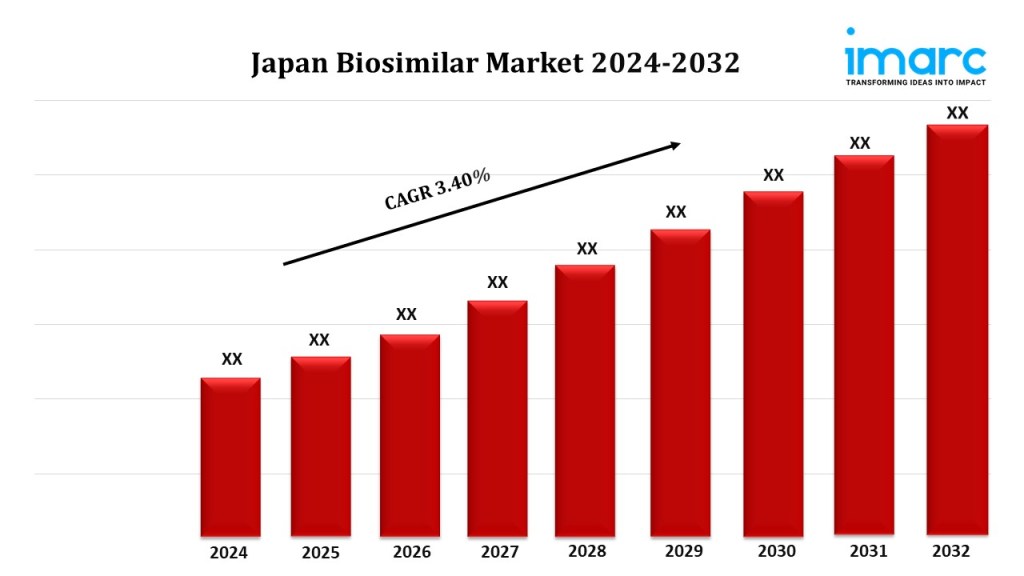
According to the IMARC Group, the Japan biosimilar market size is projected to exhibit a growth rate (CAGR) of 3.40% during 2024-2032. The market is growing due to rising healthcare costs, patent expirations, and increasing acceptance of affordable biologic alternatives.
Japan Biosimilar Market Trends and Drivers:
The Japan biosimilar market is expanding rapidly, owing to several interconnected factors. Primarily, the market is driven by the growing incidence of chronic illnesses as well as the need for more affordable treatment choices. Besides this, the market is seeing considerable support from healthcare providers and government programs attempting to lower medical expenses because biosimilars offer a highly economical option to branded biologics. In line with these factors, the Ministry of Health, Labour, and Welfare (MHLW) in Japan has actively encouraged biosimilar adoption to alleviate the financial burden on the healthcare system. Additionally, the rapid advancements in biotechnology and the robust infrastructure in Japan for biosimilar manufacturing are further propelling the growth of the Japan biosimilar market. Moreover, pharmaceutical companies are also investing in research and development (R&D) and forming partnerships to expedite the launch of high-quality biosimilar products in the country.
The Japan biosimilar market is experiencing increased acceptance of biosimilars among healthcare professionals and patients due to a growing awareness of their efficacy and safety. This acceptance is fostering more prescription rates and higher market penetration. Alongside these drivers, trends such as innovation in drug formulation targeted therapeutic solutions and sustainable manufacturing practices are shaping the market. In addition to these factors, the biosimilar sector is also benefiting from increased regulatory clarity and streamlined approval pathways, making it easier for new biosimilars to enter the market. With these dynamics, the market is set to grow as more companies and health organizations shift focus toward affordable biologic alternatives, meeting the rising healthcare needs of the population. Consequently, the convergence of these factors is anticipated to propel the expansion of the Japan biosimilar market in the coming years.
Comprehensive Mapping of the Competitive Landscape
Note: If you require any specific information that is not covered currently within the scope of the report, we will provide the same as a part of the customization.
About Us:
IMARC Group is a global management consulting firm that helps the world’s most ambitious changemakers to create a lasting impact. The company provide a comprehensive suite of market entry and expansion services. IMARC offerings include thorough market assessment, feasibility studies, company incorporation assistance, factory setup support, regulatory approvals and licensing navigation, branding, marketing and sales strategies, competitive landscape and benchmarking analyses, pricing and cost research, and procurement research.
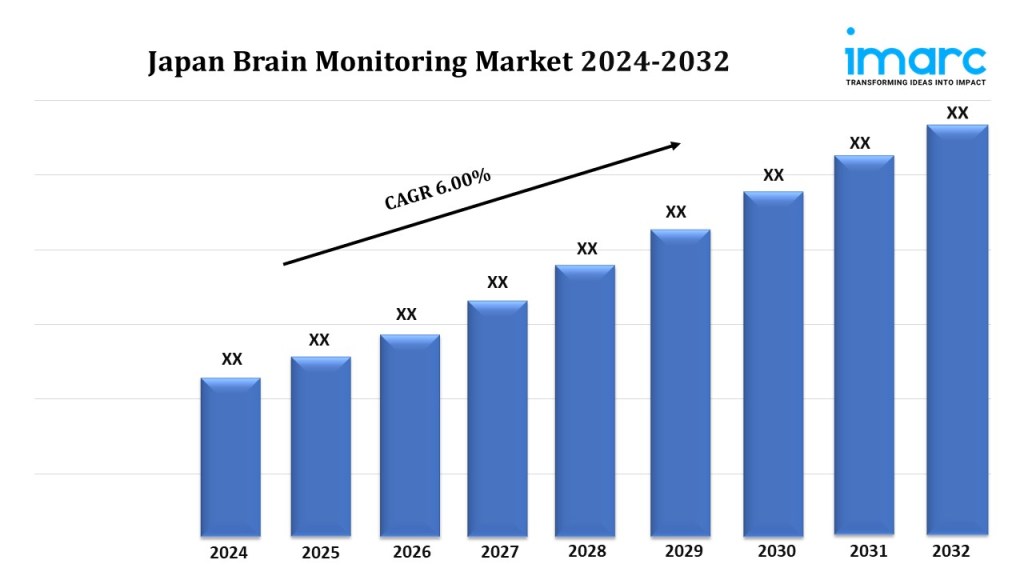
According to the IMARC Group, the Japan brain monitoring market size is projected to exhibit a growth rate (CAGR) of 6.00% during 2024-2032. The market is driven by advancements in neurotechnology, increasing neurological disorders, and growing demand for diagnostic tools.
Japan Brain Monitoring Market Trends and Drivers:
A combination of factors, such as the rising occurrence of neurological disorders, as well as advancements in healthcare technology, are responsible for the growth of the Japan brain monitoring market. Additionally, the market is propelling owing to a growing demand for neurological care as conditions like dementia, Parkinson’s disease, and Alzheimer’s become more common. This demographic trend is driving the adoption of brain monitoring technologies that aid in early diagnosis and monitoring of neurological disorders, improving patient outcomes and easing the burden on healthcare systems. Moreover, increased healthcare spending and supportive government policies to improve neurological care are fostering growth in this market, making brain monitoring equipment more accessible to hospitals and clinics across the country.
The utilization of artificial intelligence along with machine learning in diagnostic tools, which enables more accurate analysis of brain activity data, is augmenting the Japan brain monitoring market. This trend is enhancing the precision of diagnoses, particularly in complex cases, and reducing time spent on manual data interpretation by healthcare professionals. Portable and minimally invasive monitoring devices are also gaining popularity, driven by patient preferences for comfort as well as convenience, as well as the rising demand for at-home and remote patient monitoring. Furthermore, collaborations between medical device companies and research institutions are accelerating innovation in brain monitoring technologies, such as EEG and MEG systems, tailored to meet Japan’s specific healthcare needs. A focus on preventative healthcare is expected to propel the Japan brain monitoring market in the coming years as the country continues to address neurological health proactively.
Comprehensive Mapping of the Competitive Landscape
Note: If you require any specific information that is not covered currently within the scope of the report, we will provide the same as a part of the customization.
About Us:
IMARC Group is a global management consulting firm that helps the world’s most ambitious changemakers to create a lasting impact. The company provide a comprehensive suite of market entry and expansion services. IMARC offerings include thorough market assessment, feasibility studies, company incorporation assistance, factory setup support, regulatory approvals and licensing navigation, branding, marketing and sales strategies, competitive landscape and benchmarking analyses, pricing and cost research, and procurement research.
 日本市場調査