Japan Application Delivery Controller Market Overview:
Base Year: 2023
Historical Years: 2018-2023
Forecast Years: 2024-2032
Market Growth Rate:9.80% (2024-2032)
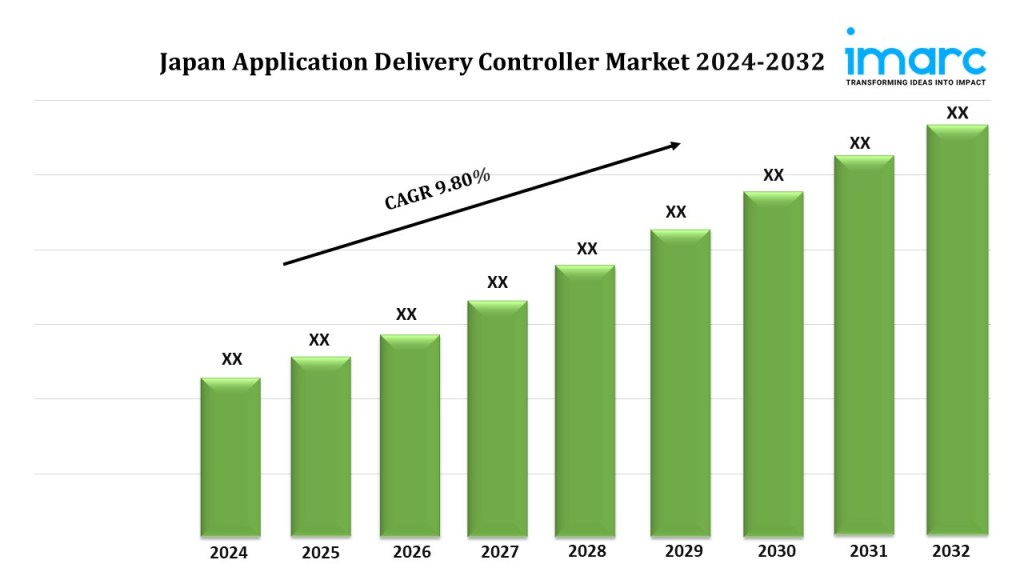
According to the IMARC Group, the Japan application delivery controller market size is projected to exhibit a growth rate (CAGR) of 9.80% during 2024-2032. The market is driven by growing demand for efficient network traffic management, enhanced security, and optimized application performance.
Japan Application Delivery Controller Market Trends and Drivers:
The Japan application delivery controller market is expanding rapidly, owing to several interconnected factors. Primarily, the increasing need for effective application management solutions in on-premises and cloud-based settings is propelling the market. Besides this, application delivery controllers (ADCs) are essential for guaranteeing smooth application performance, efficient traffic distribution, and strong security as companies throughout Japan move progressively more to digital platforms and cloud services. Additionally, the rise of e-commerce, remote work, and digital transformation initiatives in Japan significantly contributes to the growth of the Japan application delivery controller market. In line with these factors, the expanding adoption of advanced technologies such as 5G, IoT, and edge computing further accentuates the need for ADCs to manage higher volumes of data traffic and enhance user experiences.
Emerging trends in the Japan application delivery controller market include a marked shift toward software-based and virtual ADC solutions, which provide flexibility, scalability, and cost-effectiveness over traditional hardware models. Furthermore, the integration of artificial intelligence (AI) and machine learning (ML) into ADCs is improving real-time traffic analysis, predictive analytics, and automated threat mitigation, enabling proactive application management. In addition to these factors, the rising adoption of hybrid and multi-cloud strategies is driving demand for ADCs capable of providing unified performance across diverse platforms. Moreover, as cybersecurity concerns escalate, ADCs with advanced security features such as SSL offloading, DDoS protection, and application-layer firewalls are gaining traction. These trends, combined with continuous advancements in ADC technologies and investments by leading market players, are anticipated to propel the growth of the Japan application delivery controller market in the coming years.
Comprehensive Mapping of the Competitive Landscape
Note: If you require any specific information that is not covered currently within the scope of the report, we will provide the same as a part of the customization.
About Us:
IMARC Group is a global management consulting firm that helps the world’s most ambitious changemakers to create a lasting impact. The company provide a comprehensive suite of market entry and expansion services. IMARC offerings include thorough market assessment, feasibility studies, company incorporation assistance, factory setup support, regulatory approvals and licensing navigation, branding, marketing and sales strategies, competitive landscape and benchmarking analyses, pricing and cost research, and procurement research.
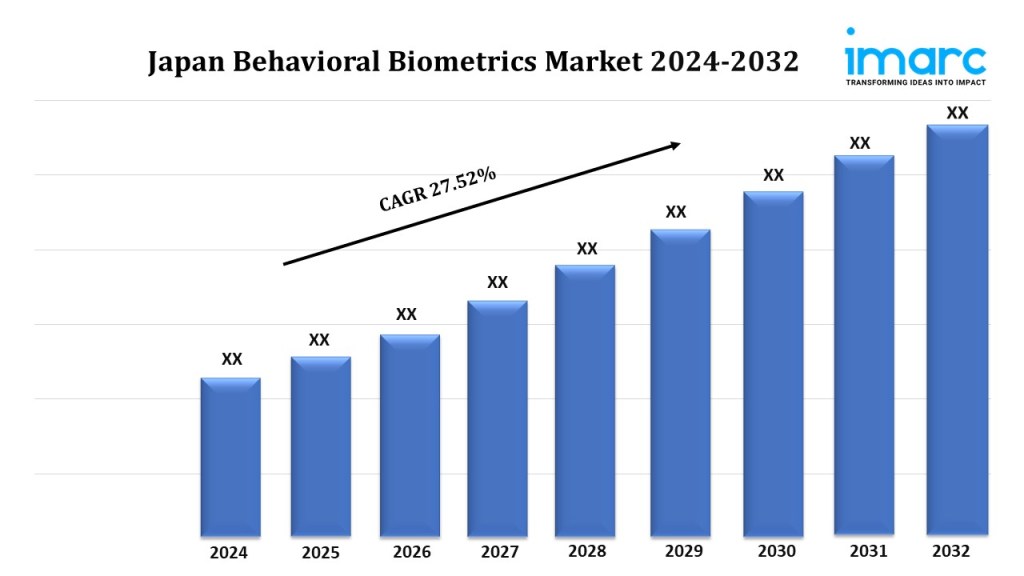
According to the IMARC Group, the Japan behavioral biometrics market size is projected to exhibit a growth rate (CAGR) of 27.52% during 2024-2032. The market is expanding, fueled by rising cybersecurity needs, digital transformation, and demand for advanced fraud prevention in financial sectors.
Japan Behavioral Biometrics Market Trends and Drivers:
The growing need for advanced security solutions to combat rising cyber threats and fraud in digital transactions is one of the factors responsible for the growth of the Japan behavioral biometrics market. Additionally, the market is propelling due to the revolutionizing digital industry across banking, financial services, e-commerce sectors, etc., as organizations seek sophisticated methods to safeguard sensitive information and enhance user experience. Besides this, initiatives by government authorities to strengthen cybersecurity frameworks and encourage the adoption of innovative technologies further support the growth of behavioral biometrics in Japan.
The integration of artificial intelligence (AI) and machine learning (ML) to improve the accuracy and adaptability of these systems is augmenting the Japan behavioral biometrics market. These technologies enable real-time monitoring and detection of anomalies, offering proactive security measures. The rising popularity of multi-factor authentication, where behavioral biometrics complement traditional methods, is gaining traction for its enhanced reliability, which is acting as another significant growth-inducing factor. Furthermore, the expanding use of behavioral biometrics in mobile applications, particularly in digital banking and payment platforms, is driving market adoption. Businesses are also exploring its potential in areas such as workforce management, where behavioral data ensures secure and seamless remote access. The growing collaboration between technology providers and industry stakeholders is fostering innovation, resulting in scalable and cost-effective solutions. Increasing consumer awareness about data privacy and security is anticipated to drive the Japan behavioral biometrics market in the coming years, driving its adoption across diverse sectors and ensuring sustained growth.
Comprehensive Mapping of the Competitive Landscape
Note: If you need specific information that is not currently within the scope of the report, we can provide it to you as a part of the customization.
About Us:
IMARC Group is a global management consulting firm that helps the world’s most ambitious changemakers to create a lasting impact. The company provide a comprehensive suite of market entry and expansion services. IMARC offerings include thorough market assessment, feasibility studies, company incorporation assistance, factory setup support, regulatory approvals and licensing navigation, branding, marketing and sales strategies, competitive landscape and benchmarking analyses, pricing and cost research, and procurement research.
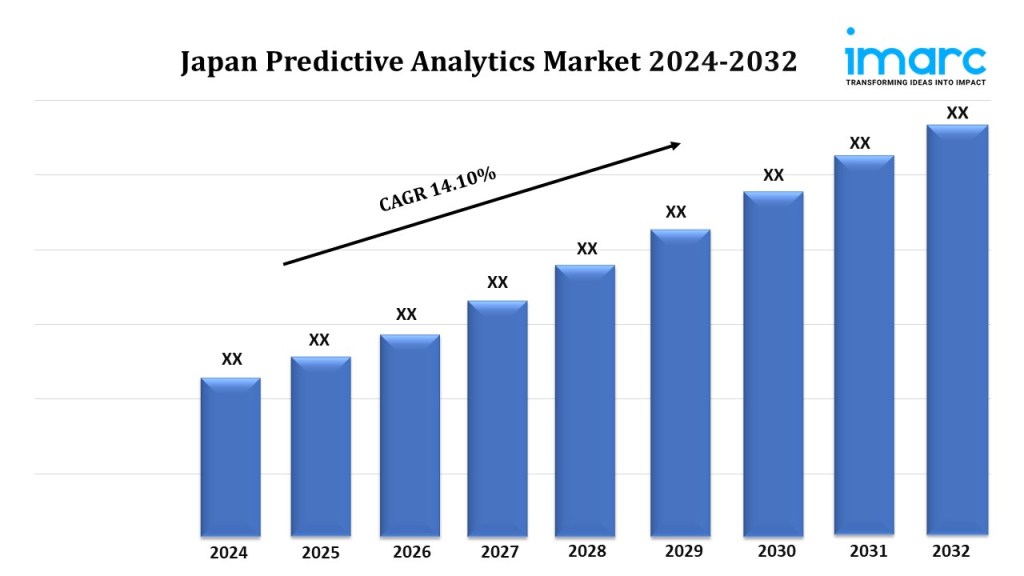
According to the latest report by IMARC Group, the Japan predictive analytics market size is projected to exhibit a growth rate (CAGR) of 14.10% during 2024-2032. This market is growing, driven by rising data-driven decision-making, AI adoption, and demand for business insights.
Japan Predictive Analytics Market Trends and Drivers:
The Japan predictive analytics market is quickly rising as data-driven decision-making becomes more prevalent in industries such as manufacturing, retail, healthcare, and finance. Primarily, the market is driven by the increasing use of data-driven decision-making in sectors including manufacturing, retail, healthcare, and finance. Besides this, employing predictive analytics to predict trends, identify risks, as well as optimize business processes is becoming more common as firms look to improve operational efficiency and obtain a competitive advantage. In line with these factors, the surge in digital transformation initiatives and the proliferation of big data are further fueling the growth of the Japan predictive analytics market. Additionally, the support of the Japanese government bodies for advanced technologies, including artificial intelligence (AI) and machine learning (ML), is encouraging businesses to adopt predictive analytics solutions to improve their strategic planning and customer insights.
The use of cutting-edge technologies like AI and ML to improve the precision and scalability of predictive models is a prominent trend in the Japan predictive analytics market. Meanwhile, these developments allow for highly accurate forecasting as well as real-time data analysis, which are especially useful in industries like healthcare for individualized treatment planning and financial services for fraud detection. Moreover, the increasing adoption of cloud-based analytics platforms is providing businesses with scalable and cost-effective solutions. Apart from this, the rising focus on Industry 4.0 and the Internet of Things (IoT) is also driving demand for predictive maintenance and supply chain optimization. Consequently, with continuous advancements in analytics tools and increasing awareness of their benefits, the Japan predictive analytics market is poised for substantial growth in the coming years.
The competitive landscape of the industry has also been examined along with the profiles of the key players.
Key highlights of the Report:
Market Performance (2018-2023)
Market Outlook (2024-2032)
Porter’s Five Forces Analysis
Strategic Recommendations
Historical, Current and Future Market Trends
Market Drivers and Success Factors
SWOT Analysis
Structure of the Market
Value Chain Analysis
Comprehensive Mapping of the Competitive Landscape
Note: If you need specific information that is not currently within the scope of the report, we can provide it to you as a part of the customization.
About Us:
IMARC Group is a global management consulting firm that helps the world’s most ambitious changemakers to create a lasting impact. The company provide a comprehensive suite of market entry and expansion services. IMARC offerings include thorough market assessment, feasibility studies, company incorporation assistance, factory setup support, regulatory approvals and licensing navigation, branding, marketing and sales strategies, competitive landscape and benchmarking analyses, pricing and cost research, and procurement research.
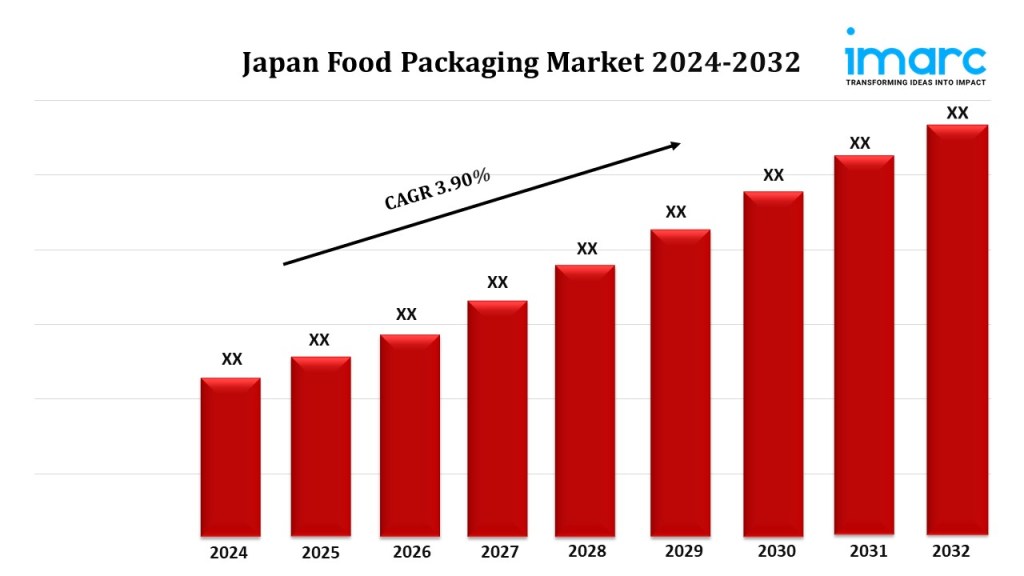
According to the IMARC Group, the Japan food packaging market size is projected to exhibit a growth rate (CAGR) of 3.90% during 2024-2032. This market grows due to demand for convenience foods, sustainability, innovative materials, and advanced safety regulations.
Japan Food Packaging Market Trends and Drivers:
The growing need for convenience foods along with ready-to-eat meals among busy urban consumers are the factors responsible for the growth of the Japan food packaging market. Additionally, the market is propelling owing to the rise of single-person households and dual-income families. This trend is fueling the demand for innovative packaging solutions that can continue the freshness and safety of food while being easy to handle and store. Moreover, the expansion of the e-commerce and food delivery sectors in Japan has increased the need for durable, leak-proof, and sustainable packaging as online food shopping continues to rise in popularity. The emphasis on product safety and hygiene, particularly in the wake of the COVID-19 pandemic, has further accelerated the adoption of advanced packaging materials and technologies.
The shift towards eco-friendly and sustainable packaging solutions is augmenting the Japan food packaging market. In addition to this, both consumers and companies are seeking alternatives to single-use plastics, driving the need for biodegradable, recyclable, and reusable packaging materials with growing environmental awareness. Food companies are increasingly investing in packaging innovations, such as plant-based plastics and paper-based packaging, to reduce their environmental impact. Furthermore, the push by government authorities for sustainability and stricter regulations on plastic waste are encouraging the adoption of greener packaging practices. Another trend is the adoption of smart packaging technologies, including QR codes and sensors, which provide consumers with real-time information on product freshness, sourcing, and nutritional content. Advancements and a strong focus on sustainability are anticipated to drive the Japan food packaging market in the coming years.
Comprehensive Mapping of the Competitive Landscape
Note: If you require any specific information that is not covered currently within the scope of the report, we will provide the same as a part of the customization.
About Us:
IMARC Group is a global management consulting firm that helps the world’s most ambitious changemakers to create a lasting impact. The company provide a comprehensive suite of market entry and expansion services. IMARC offerings include thorough market assessment, feasibility studies, company incorporation assistance, factory setup support, regulatory approvals and licensing navigation, branding, marketing and sales strategies, competitive landscape and benchmarking analyses, pricing and cost research, and procurement research.
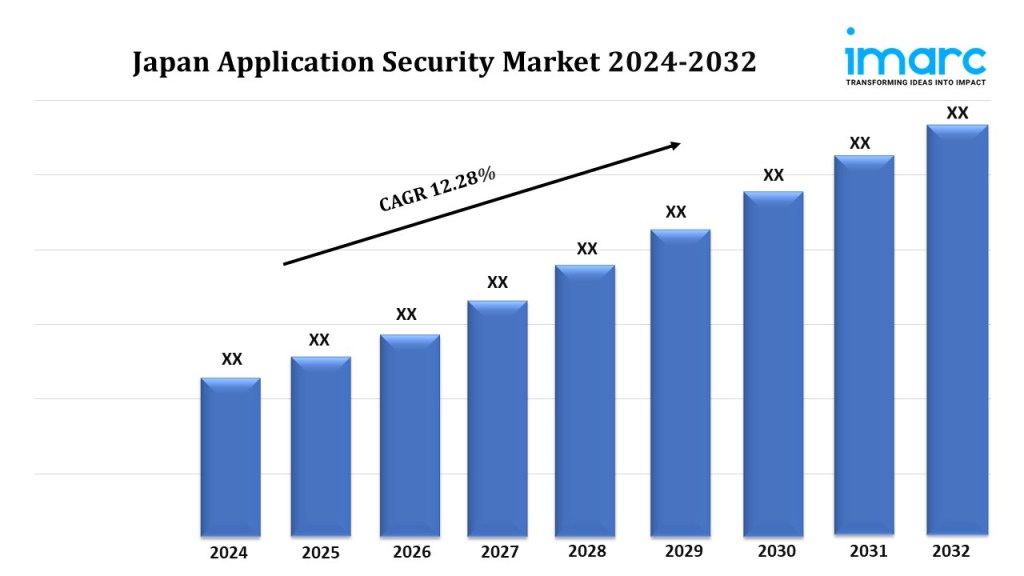
According to the IMARC Group, the Japan application security market size is projected to exhibit a growth rate (CAGR) of 12.28% during 2024-2032. This market grows as businesses prioritize data protection, driven by increasing cyber threats and regulatory compliance needs.
Japan Application Security Market Trends and Drivers:
The escalating cyber threats as well as the high adoption of cloud-based applications across various sectors are the factors responsible for the growth of the Japan application security market. Additionally, as businesses and public institutions digitize operations and shift to cloud environments, the demand for robust application security measures has intensified. Cybersecurity incidents, including data breaches & ransomware attacks, have heightened consciousness among organizations about the need to protect their applications and sensitive data. Regulatory frameworks, such as Japan’s Act on the Protection of Personal Information (APPI), are driving companies to implement advanced application security solutions to ensure compliance and safeguard user data.
The adoption of AI-driven solutions, which enable faster identification and mitigation of security vulnerabilities, is augmenting the Japan application security market. These solutions integrate machine learning algorithms to detect anomalies and prevent potential threats in real time, offering proactive protection against evolving cyber risks. Furthermore, companies are focusing on DevSecOps, embedding security practices directly into the software development lifecycle to address vulnerabilities early on. This shift helps streamline security and ensure resilient application performance, minimizing risks as applications move to production. Cloud-native application security is also gaining traction, providing flexible and scalable options for businesses moving to hybrid and multi-cloud infrastructures. The ongoing advancements in AI and cloud technologies, along with a strong emphasis on regulatory compliance and data protection, are anticipated to drive the Japan application security market in the coming years, supporting organizations in safeguarding digital assets against an increasingly complex threat landscape.
Comprehensive Mapping of the Competitive Landscape
Note: If you require any specific information that is not covered currently within the scope of the report, we will provide the same as a part of the customization.
About Us:
IMARC Group is a global management consulting firm that helps the world’s most ambitious changemakers to create a lasting impact. The company provide a comprehensive suite of market entry and expansion services. IMARC offerings include thorough market assessment, feasibility studies, company incorporation assistance, factory setup support, regulatory approvals and licensing navigation, branding, marketing and sales strategies, competitive landscape and benchmarking analyses, pricing and cost research, and procurement research.
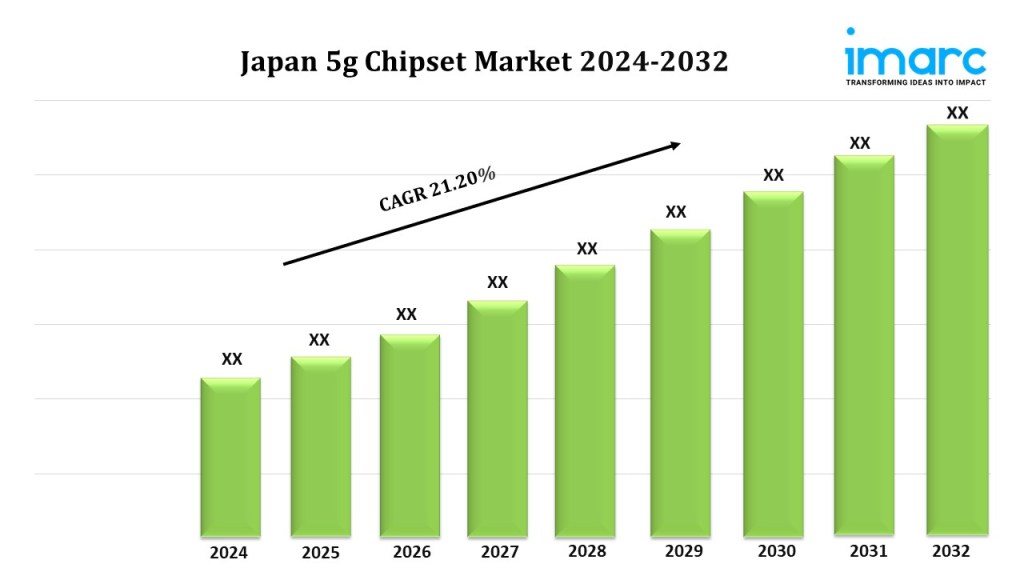
According to the IMARC Group, the Japan 5G chipset market size is projected to exhibit a growth rate (CAGR) of 21.20% during 2024-2032. This market is expanding due to rising demand for high-speed connectivity, IoT adoption, and advancing smart technology applications.
The Japan 5G chipset market is expanding rapidly, owing to several interconnected factors. Primarily, the market is being driven by the quick uptake of 5G technology as well as its integration into several industries, including manufacturing, healthcare, telecommunications, and automobiles. Besides this, the demand for cutting-edge 5G chipsets to power devices and infrastructure has increased because of Japan’s 5G network rollout, which government efforts and large investments by telecom operators have aided. In addition to these factors, the Japan 5G chipset market is also benefiting from Japan’s strong semiconductor industry and its focus on innovation and development in microelectronics. Moreover, the increasing use of Internet of Things (IoT) devices, autonomous vehicles, and smart city solutions is further boosting the need for high-performance chipsets capable of supporting ultra-reliable, low-latency communications.
Emerging trends in the Japan 5G chipset market include the growing preference for energy-efficient chipsets, which cater to the need for sustainable and cost-effective solutions in 5G networks. Additionally, advancements in chipset design, such as system-on-chip (SoC) configurations that integrate multiple functionalities, are enhancing the performance and compactness of 5G-enabled devices. In line with these factors, leading manufacturers are focusing on collaborations with technology firms and telecom operators to develop customized solutions for diverse applications. Furthermore, the adoption of millimeter-wave (mmWave) technology and the increasing demand for chipsets capable of supporting high-speed data transmission are shaping the market dynamics. These trends, combined with the expansion of 5G coverage and the proliferation of smart devices, are anticipated to drive the growth of the Japan 5G chipset market over the forecasted period.
Japan 5G Chipset Market Report Segmentation:
The market report offers a comprehensive analysis of the segments, highlighting those with the largest Japan 5G chipset market share. It includes forecasts for the period 2024-2032 and historical data from 2018-2023 for the following segments.
Breakup By Chipset Type:
Application-Specific Integrated Circuits (ASIC)
Radio Frequency Integrated Circuit (RFIC)
Millimeter Wave Technology Chips
Field-programmable Gate Array (FPGA)
Breakup By Operational Frequency :
Sub 6 GHz
Between 26 and 39 Ghz
Above 39 Ghz
Breakup By End User:
Consumer Electronics
Industrial Automation
Automotive and Transportation
Energy and Utilities
Healthcare
Retail
Others
Breakup By Region:
Kanto Region
Kansai/Kinki Region
Central/ Chubu Region
Kyushu-Okinawa Region
Tohoku Region
Chugoku Region
Hokkaido Region
Shikoku Region
Competitive Landscape:
The competitive landscape of the industry has also been examined along with the profiles of the key players.
Comprehensive Mapping of the Competitive Landscape
Note: If you need specific information that is not currently within the scope of the report, we can provide it to you as a part of the customization.
About Us:
IMARC Group is a global management consulting firm that helps the world’s most ambitious changemakers to create a lasting impact. The company provide a comprehensive suite of market entry and expansion services. IMARC offerings include thorough market assessment, feasibility studies, company incorporation assistance, factory setup support, regulatory approvals and licensing navigation, branding, marketing and sales strategies, competitive landscape and benchmarking analyses, pricing and cost research, and procurement research.
 日本市場調査